
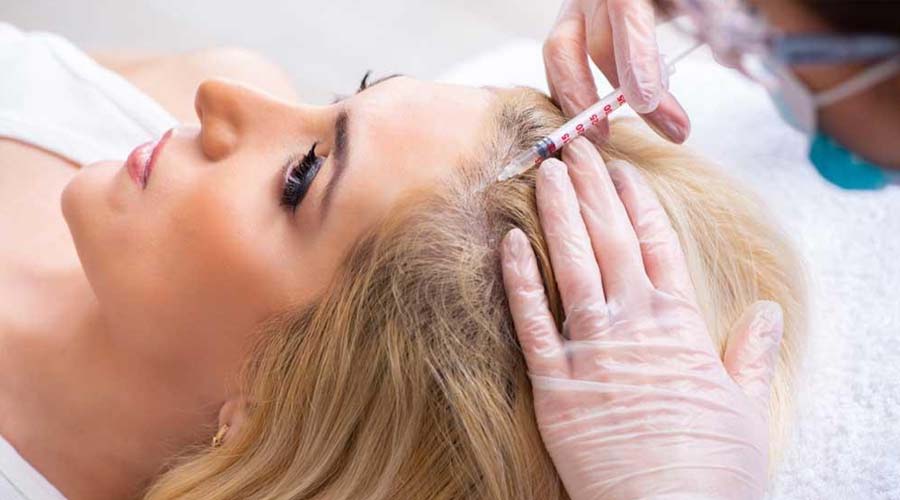
PRP hair loss treatment Bali is a question worth asking honestly, since PRP is heavily marketed for hair restoration and it’s easy to come across bold claims that aren’t fully backed by the underlying research. Here’s a straightforward look at what the current evidence actually supports, so you can go into a consultation with realistic expectations rather than marketing promises.
What PRP Actually Is
PRP, or platelet-rich plasma, involves drawing a small amount of your own blood, processing it to concentrate the platelets, and injecting that concentrate into the scalp. Platelets contain growth factors, and the theory behind PRP for hair loss is that these growth factors can stimulate dormant follicles and improve blood supply to thinning areas.
Because the treatment uses your own blood, it carries a favorable safety profile compared to some other interventions, with side effects generally limited to temporary scalp sensitivity, mild swelling at injection sites, and occasional headache.
Read more: Dermal Fillers Bali: Restoring Volume and Youthful Contours
What the Evidence Actually Shows
The research on PRP for hair loss has grown substantially in recent years, and the overall picture is more nuanced than either enthusiastic marketing or outright skepticism would suggest. Systematic reviews of the available clinical trials generally point to real, measurable improvements in hair density and thickness for many patients, though the size of that improvement varies considerably between studies due to differences in how the PRP itself is prepared and applied.
Compared to well-established first-line treatments like minoxidil, the evidence base for PRP is still considered less robust and more variable. This doesn’t mean PRP doesn’t work — it means the research hasn’t reached the same level of consistency and certainty that exists for those older, more studied treatments. Reputable sources are generally cautious about treating PRP as a guaranteed or standalone solution, and any provider promising guaranteed results is overstating what the evidence currently supports.
Who Tends to Respond Best
The research consistently points to one clear pattern: PRP tends to work best for early to moderate hair thinning, where follicles are still viable but shrinking, rather than areas of more advanced or long-standing hair loss where follicles may no longer be active enough to respond to stimulation. This is part of why an honest assessment of your specific stage of hair loss matters more than the marketing around the treatment itself.
Combining PRP with other established treatments, such as topical minoxidil, has shown better results in several studies than PRP used alone, suggesting it may work best as part of a broader approach rather than a single fix.
What a Treatment Course Typically Involves
PRP for hair loss generally requires a series of initial sessions, commonly spaced several weeks apart, followed by periodic maintenance treatments to sustain any improvement gained. This isn’t a one-and-done treatment — the follicle stimulation effect appears to fade over time without ongoing sessions, similar to how many regenerative treatments work.
Given this, it’s worth thinking about PRP as a longer-term commitment rather than a quick fix, both from a scheduling and a budget perspective.
Setting Realistic Expectations
The honest answer to whether PRP “works” is that it can produce genuine, measurable improvement for the right candidate, but it isn’t a guaranteed fix for everyone, and results are generally modest rather than dramatic. It’s not a substitute for addressing other underlying causes of hair loss — thyroid issues, nutritional deficiencies, or other medical conditions — which is why ruling out other causes is often a sensible first step before starting treatment.
Planning Treatment Around Your Trip
Since PRP requires multiple sessions spaced weeks apart, it’s better suited to an extended stay or a series of return visits to Bali rather than something completed in one short trip. It’s worth discussing a realistic timeline upfront if you’re hoping to fit a full course into your travel plans.
Read more: Laser Hair Removal Bali: What to Know Before Your First Visit
Getting an Honest Assessment
Whether PRP is a reasonable option for your specific hair loss depends on factors like the stage and pattern of thinning, and possibly underlying causes that a proper assessment can help identify. This is a conversation worth having directly with a clinician rather than basing a decision on marketing claims alone.
At Starlight Clinics, PRP consultations include an honest discussion of what the treatment can realistically offer based on your specific situation, rather than overselling results the evidence doesn’t fully support.